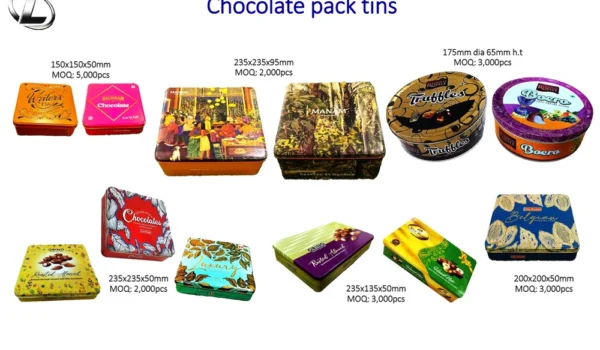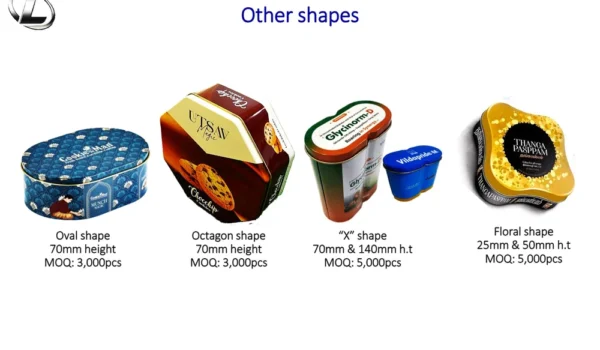
Before ordering custom tin boxes from an Indian manufacturer, verify five things: ISO 9001:2015 certification, the tin plate gauge and food-grade coating used, printing and finishing capability (offset, embossing, matte/glossy/metallic), minimum order quantity and realistic lead time, and sample approval before bulk production. Skipping any one of these is the most common reason brands receive tin packaging that dents easily, prints unevenly, or arrives weeks later than promised.
India manufactures a large share of the world’s custom tin packaging for confectionery, cosmetics, tea and coffee, pharmaceuticals, and gift brands, combining skilled metal printing craftsmanship with costs that are highly competitive against European or Chinese suppliers. But “manufacturer” covers a wide range of operations — from fully integrated factories that print, form, and finish tins in-house, to trading intermediaries who outsource production to smaller job-work units with no consistent quality control between batches. For a brand ordering packaging that will sit on retail shelves or represent a premium product, that difference shows up fast, in dented corners, mismatched print colors, or lids that don’t seal properly.
This guide walks through exactly what to check before you place an order with a custom tin box manufacturer in India, the specifications that actually affect quality, and the questions a genuine manufacturer should be able to answer immediately.
Why Brands Source Custom Tin Packaging from India
Indian tin packaging manufacturers offer a combination that’s difficult to match elsewhere: lower production costs due to domestic raw material access and manufacturing scale, decades of specialized metal printing and lithography expertise built up serving confectionery, tea, and paint industries, and increasingly strong export logistics to the Middle East, Africa, and Southeast Asia. Tin packaging has also seen renewed demand as brands move away from single-use plastic toward recyclable, reusable metal packaging that customers perceive as premium.
Cost savings only matter if the packaging performs, though. A tin box priced 15% below competitors but delivered with a thinner gauge that dents in transit, or printing that fades within months of retail display, damages brand perception far more than the initial saving justifies.
The Order Checklist: What to Verify Before You Commit
1. Certification and Quality Systems
Ask for the manufacturer’s ISO 9001:2015 certificate, which confirms a documented quality management system across production stages — from raw tin plate inspection to final packing. For tins intended for food contact (confectionery, tea, coffee, edible oil), also confirm the tin coating and printing inks are food-grade compliant and suitable for direct or indirect food contact under FSSAI guidelines. A manufacturer that can’t produce a certificate number or food-grade compliance documentation on request is a signal to look further.
2. Tin Plate Gauge and Base Material
The thickness of the tin plate (measured in microns or gauge) directly determines dent resistance, stacking strength, and perceived premium quality. Thinner tins cost less but are more prone to denting during transit and handling — a critical factor for products shipped long distances or displayed on retail shelves. Ask specifically:
• What tin plate thickness (in microns) is used for the box body versus the lid?
• Is the base material electrolytic tinplate (ETP) or tin-free steel (TFS), and which grade?
• Is the coating weight suitable for food contact, and does it meet FDA or FSSAI food-grade standards?
3. Printing, Embossing, and Finish Quality — Get Specifications, Not Adjectives
A supplier that describes their printing as “premium quality” without specifying the process or color capability hasn’t given you anything to evaluate against a competing quote. Ask for the exact printing method, color separation capability, and finish options for your order. Here’s how the main custom tin packaging specifications typically compare across standard and premium production tiers in India:
| Specification | Standard Tier | Premium Tier | Why It Matters |
| Tin Plate Thickness | 0.18mm – 0.22mm | 0.23mm – 0.28mm | Higher gauge resists dents and supports heavier products |
| Printing Process | Offset lithography, up to 4 colors | Offset lithography, 6+ colors with spot Pantone matching | More colors and Pantone matching preserve exact brand identity |
| Coating Type | Standard lacquer | Food-grade lacquer (FSSAI/FDA compliant) | Required for direct food contact applications |
| Finish Options | Matte or gloss only | Matte, gloss, metallic, pearl, soft-touch, embossed | Premium finishes support higher shelf positioning |
| Typical MOQ | 3,000 – 5,000 units | 5,000 – 10,000+ units | Premium finishes and custom dies usually require higher volumes |
| Standard Lead Time | 3–4 weeks | 5–7 weeks | Custom tooling, dies, and multi-stage finishing add production time |
Note: these are general industry reference ranges. Always request the manufacturer’s exact specification sheet and a physical sample for your specific box size, shape, and finish combination — actual figures vary by design complexity, die requirements, and order volume.
4. Custom Shapes, Sizes, and Tooling
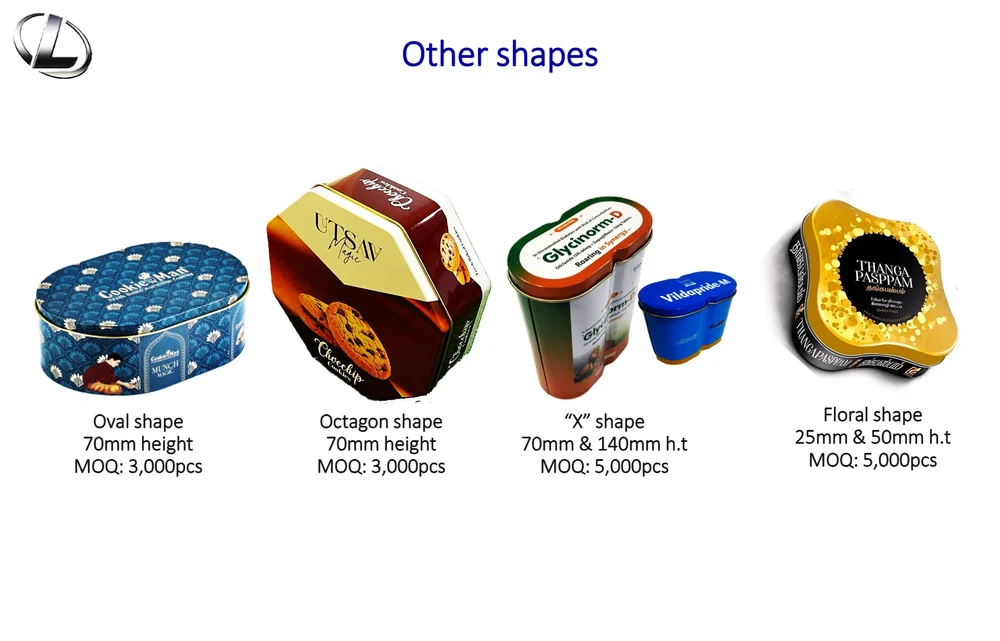
Standard round or square tins use existing dies and cost less, while custom shapes, hinged lids, or window cutouts require new tooling — a one-time cost that should be quoted separately and transparently. Ask whether the manufacturer owns in-house die-making and tooling capability, or outsources it, since outsourced tooling adds both cost and lead time. For brands ordering food and beverage, cosmetics, or jewellery and gift tin packaging, confirm the manufacturer has prior experience with your specific box category, since sealing tolerances and finish expectations differ significantly between a food tin and a jewellery presentation box.
5. Minimum Order Quantity, Lead Time, and Sample Approval
Confirm the MOQ upfront, since it varies significantly by finish complexity — a simple printed round tin may have a lower MOQ than an embossed hinged box with a custom window. Always request a physical pre-production sample before bulk manufacturing begins; approving a digital proof alone is not sufficient, since color reproduction and material feel can differ meaningfully between a screen proof and the finished metal surface. Confirm sample turnaround time and whether sample costs are adjusted against the bulk order.
6. Bulk Production Consistency and Batch-to-Batch Quality
Ask how the manufacturer controls color consistency across large production runs — printing drift between batches is one of the most common quality complaints in bulk tin orders. A manufacturer with in-house quality control checkpoints at printing, forming, and final inspection stages will catch these issues before shipment rather than after a client complaint.
7. Factory Visibility and Production Transparency
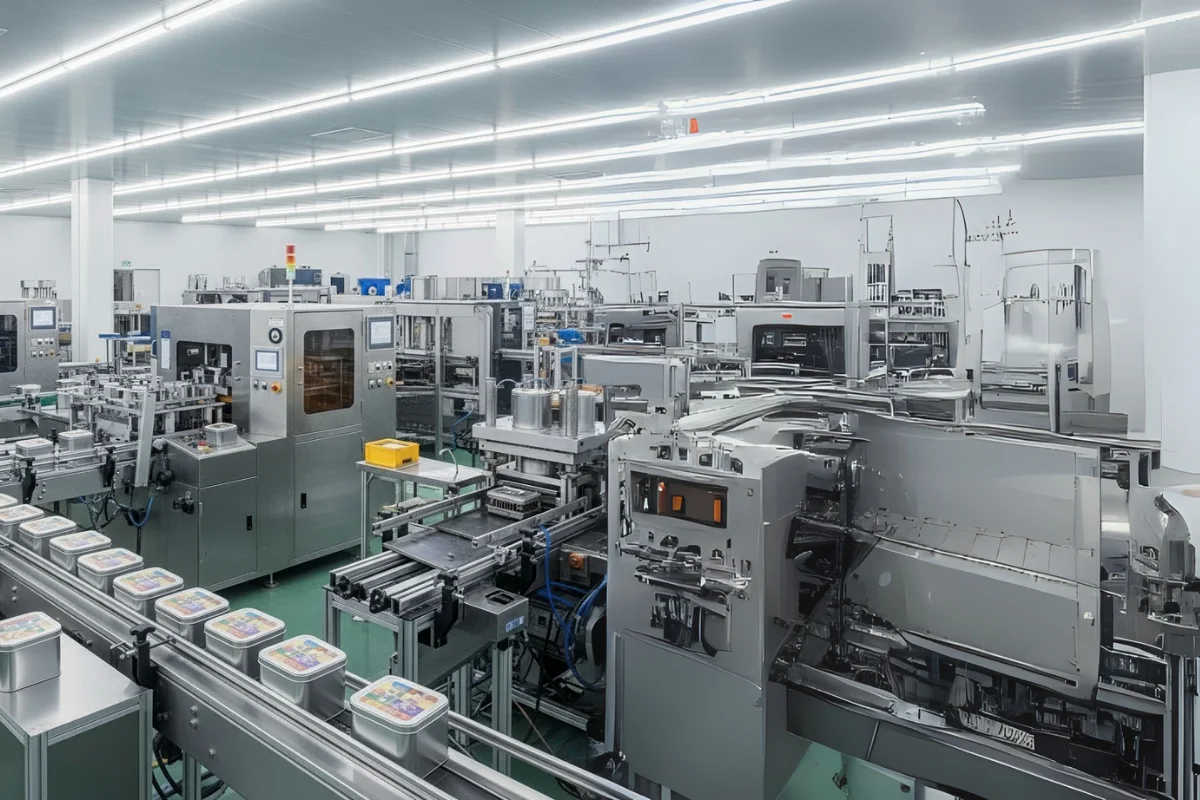
Where the order value justifies it, ask for photos or video of the actual printing and forming lines, and request a factory visit if feasible given your location. A manufacturer with genuine in-house production — printing presses, forming machines, and finishing lines under one roof — will not hesitate to show this. A trading intermediary reselling job-work production usually will.
Common Mistakes Brands Make When Ordering Custom Tin Packaging
Choosing the lowest quote without checking gauge thickness. A significantly cheaper quote often means thinner tin plate, which dents in transit and undermines the premium positioning the packaging was meant to support.
Approving a digital proof instead of a physical sample. Screen colors and printed metal colors are not the same — always insist on a physical sample before committing to bulk production.
Not specifying food-grade requirements in writing. If your product touches the tin directly (loose tea, cookies, edible oil), the coating and printing inks must be certified food-safe — this needs to be confirmed before production, not assumed.
Underestimating lead time for custom tooling. Custom shapes, embossing, or window cutouts require new dies, which can add 2–3 weeks to standard lead times — factor this into launch timelines.
Not checking category-specific experience. A manufacturer experienced with confectionery and sweets tin packaging understands freshness-preserving seal tolerances that may not apply to industrial and utility tin containers for paints or chemicals, and vice versa.
Why Choose Larsan Tins as Your Custom Tin Box Manufacturer in India
Larsan Tins is an ISO 9001:2015-certified tin packaging manufacturer based in Puducherry, India, with 30+ years of manufacturing experience and over 1,000 clients served across food, confectionery, cosmetics, jewellery, pharmaceutical, and industrial sectors. We manufacture custom tin boxes in round, square, rectangular, and bespoke shapes, with in-house capability across food and beverage tin packaging, jewellery and garment tin packaging, sweets and confectionery tins, cosmetics and personal care tins, and industrial and utility tin containers.
Our value-added finishing includes embossing, hinged lids, transparent window tins, and matte, glossy, metallic, and pearl surface finishes, backed by ISO-certified quality control processes and an advanced in-house manufacturing facility covering printing, forming, and finishing under one roof.
If you’re evaluating custom tin box manufacturers in India for an upcoming packaging order, get in touch with our team with your product category, target volume, and finish requirements, or explore our full product range to see examples across every category we manufacture.
Larsan Tins is an ISO 9001:2015-certified custom tin box manufacturer based in Puducherry, India, serving 1,000+ clients across food, confectionery, cosmetics, pharmaceutical, and industrial sectors. Explore our product range or contact our team to discuss your custom tin packaging requirements.
Is it safe to order custom tin packaging from an Indian manufacturer?
Yes, provided the manufacturer is ISO 9001:2015 certified, confirms food-grade coating compliance for food-contact applications, and has an established production track record. Always request a physical sample before approving bulk production.
What tin plate thickness should I choose for my custom tin box?
Standard tin packaging typically uses 0.18mm–0.22mm gauge tinplate, while premium packaging intended for heavier products or higher dent resistance uses 0.23mm–0.28mm. Your manufacturer should recommend gauge based on your product weight and shipping distance.
What is the minimum order quantity (MOQ) for custom tin boxes in India?
MOQ typically ranges from 3,000–5,000 units for standard printed tins to 5,000–10,000+ units for premium finishes like embossing or custom window cutouts, since these require dedicated tooling that is more cost-effective at higher volumes.
How long does it take to manufacture custom tin packaging in India?
Standard production lead time is typically 3–4 weeks for existing shapes and finishes, extending to 5–7 weeks when custom dies, embossing, or multi-stage finishing are required.
Is tin packaging food safe for direct food contact?
Yes, when manufactured with food-grade tin coating and FSSAI or FDA-compliant printing inks. Always confirm this certification in writing for any packaging intended for cookies, sweets, tea, coffee, or edible oil.
What is the difference between a tin packaging manufacturer and a trading company in India?
A manufacturer owns in-house printing, forming, and finishing equipment and can show production facilities directly. A trading company sources from third-party job-work units, which often introduces inconsistency in gauge, color matching, and finish quality between orders.